
This is the question virtually every first-time foreign buyer asks — and rarely gets a straight answer to. Let us give you one: yes, buying real estate in Mexico is safe when executed correctly. Tens of thousands of Americans and Canadians own property in Mexico right now, and the overwhelming majority are satisfied, legally protected owners.
But “safe” requires nuance. There are legitimate risks — and they are almost entirely avoidable with basic due diligence. This guide separates the real risks from the myths, so you can make a decision based on facts.
The Myths: What Is NOT a Real Risk
Myth 1: “The Mexican government can just take your property”
False. Mexico has robust constitutional protections against unlawful expropriation that apply to foreigners as well as nationals. In the modern era, there is no documented case of the Mexican government confiscating properly purchased, properly titled foreign-owned residential real estate. The Fideicomiso system is explicitly authorized and protected by federal law.
Myth 2: “The bank can take your property if they go bankrupt”
False. Under Mexican trust law, Fideicomiso property is explicitly excluded from the bank’s balance sheet. If your trustee bank fails, the government steps in to transfer the trust to another bank. Your property is not a bank asset — it cannot be claimed by the bank’s creditors.
Myth 3: “You can’t really own it because of the restricted zone”
False. The Fideicomiso grants you every meaningful ownership right: possession, use, rental income, sale rights, and inheritance. Courts in both Mexico and the US recognize it as genuine legal ownership. The “restriction” is a constitutional formality addressed entirely by the trust structure.
The Real Risks — And How to Eliminate Them
Risk 1: Buying property with a clouded title
This is the actual source of most real estate disasters in Mexico. A clouded title means the property has an unresolved issue: existing liens, unpaid taxes, disputed ownership, or sale without spousal consent. The solution is non-negotiable: hire your own attorney to conduct an independent title search before signing anything.
Probability if you use proper due diligence: essentially zero.
Risk 2: Ejido land
Ejido is communal agricultural land that was historically distributed to farming communities after the Mexican Revolution. Ejido land cannot legally be sold to foreigners until it has been converted to private title through a process called dominio pleno. Unconverted ejido land is frequently offered for sale in coastal areas — sometimes unknowingly by sellers, sometimes fraudulently.
The fix: Verify in the Public Registry that the property has been issued a full private deed (escritura pública). Zero exceptions. Your attorney does this automatically.
Risk 3: Wire fraud and escrow fraud
This risk is not unique to Mexico — it is the same wire fraud risk that exists in US real estate transactions. The prevention is identical: always use a licensed third-party escrow company (Stewart Title México or First American Title México are standard). Never wire funds directly to a seller or agent based on email instructions.
Risk 4: Developer risk in pre-construction
Pre-construction (“pre-sale”) purchases in Tulum and Cancún offer attractive price points but carry developer risk — the possibility that the developer fails to complete the project. Mitigation: use escrow (funds released in phases tied to construction milestones), buy from developers with a proven delivery track record, and have your attorney review the sales contract thoroughly.
Risk 5: Personal security at the property
Mexico’s security situation is highly localized. The tourist real estate markets — Cabo, Cancún, Puerto Vallarta, Tulum, Mérida — have safety profiles comparable to US resort cities. State Department travel advisories reflect conditions in specific regions (mostly northern border states and certain rural areas) that are entirely separate from the coastal expat markets.
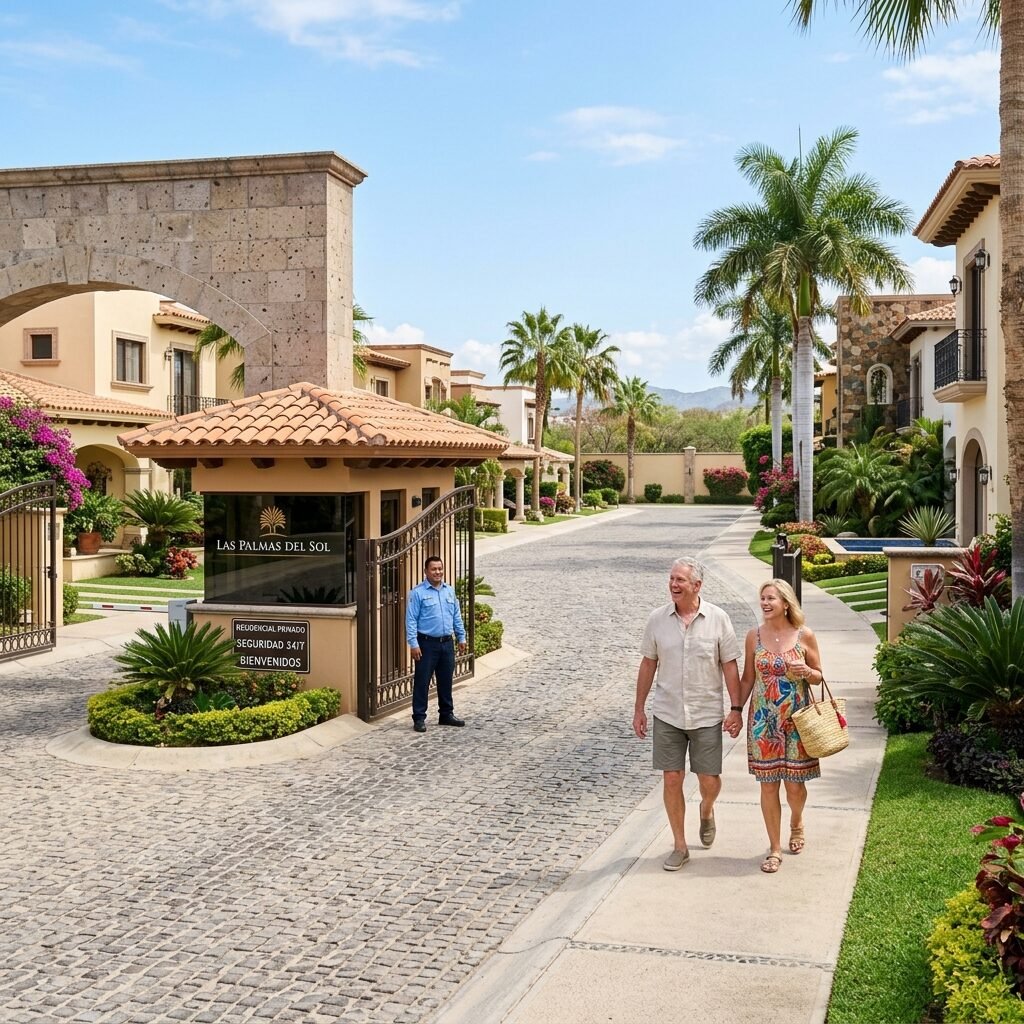
Practical steps for property security: gated community or 24-hour security, a trusted local caretaker for when you are absent, standard insurance coverage.
The Safe Buyer Checklist
- ✅ Hire an independent attorney (not the seller’s)
- ✅ Order a full title search at the Public Registry
- ✅ Confirm the property is NOT ejido land
- ✅ Use third-party escrow for all funds
- ✅ Do NOT wire funds based solely on email instructions
- ✅ Work with an AMPI-certified agent
- ✅ Have the notario deed review your fideicomiso before signing
- ✅ Purchase title insurance if available for your transaction
The Data: Foreign Property Ownership in Mexico
According to Mexico’s AMPI (the national real estate professionals association), approximately 12% of all real estate transactions in the coastal markets involve foreign buyers. In Los Cabos, that figure approaches 60% in the luxury segment. There are conservatively 500,000+ foreign-owned properties in Mexico — the vast majority owned without incident, generating rental income and appreciated values for their owners.
The foreign buyer market in Mexico has grown every year for the past decade, including through the 2020 pandemic. That growth signals confidence, not risk.
Ready to browse safe, verified listings with direct agent access?
Browse Verified Mexico Listings →
Property Security Best Practices for Foreign Owners
Regardless of how safe your chosen market is statistically, practical security measures are standard practice for foreign property owners in Mexico — particularly for those who are not in residence year-round:
For Seasonal/Absent Owners
- Hire a trusted local caretaker. This is the single most important thing you can do for property security. A caretaker who checks the property weekly, handles small maintenance issues, and is a visible presence deters the vast majority of opportunistic problems. Budget $400–$800 USD/month.
- Install a monitored alarm system. Mexican security companies offer quality monitored systems at a fraction of US costs. Monthly monitoring service: $20–$50 USD/month.
- Use smart home technology. Remote camera access, smart locks, and motion-triggered lighting give you visibility and control from anywhere. Systems that work well in Mexico: Ring (works with Mexican LTE SIMs), Arlo, and Hikvision.
- Build relationships with neighbors. In Mexico’s expat communities, the social infrastructure of mutual oversight among neighbors is genuine and effective. Introduce yourself, exchange WhatsApp contacts, and ask neighbors to keep an eye out.
- Don’t advertise vacancy. Avoid posting departure dates or empty-house photos on social media. Your Mexican housekeeper, caretaker, and trusted neighbors should be the only people who know your schedule.
For Full-Time or Extended Residents
- Choose gated communities if you want the maximum security infrastructure without personal management overhead
- Keep a low profile with valuables — this is standard practice for wealthy Mexicans as well as foreigners
- Register with your country’s consular outreach program — the US STEP (Smart Traveler Enrollment Program) program and Canada’s Registration of Canadians Abroad are both free
- Establish relationships with your local Protección Civil and trust a local attorney who can help navigate any administrative issues
Title Insurance: An Extra Layer of Legal Protection
While title insurance is less common in Mexico than in the US, it is available and represents a meaningful risk-mitigation tool for foreign buyers:
- Stewart Title México offers owner’s title insurance policies for Mexico properties
- First American Title México similarly provides coverage for residential and commercial transactions
- Premiums are typically 0.5–1% of the property value as a one-time fee
- Coverage protects against title defects discovered after closing that your pre-closing due diligence missed
Title insurance is particularly recommended for properties in markets with higher ejido conversion history (Tulum, Pacific coast) or for buyers who feel less confident in the completeness of the notario’s due diligence.
Ready to Find Your Mexico Property?
Browse verified listings across all 6 major markets — direct agent WhatsApp access, no middlemen.