
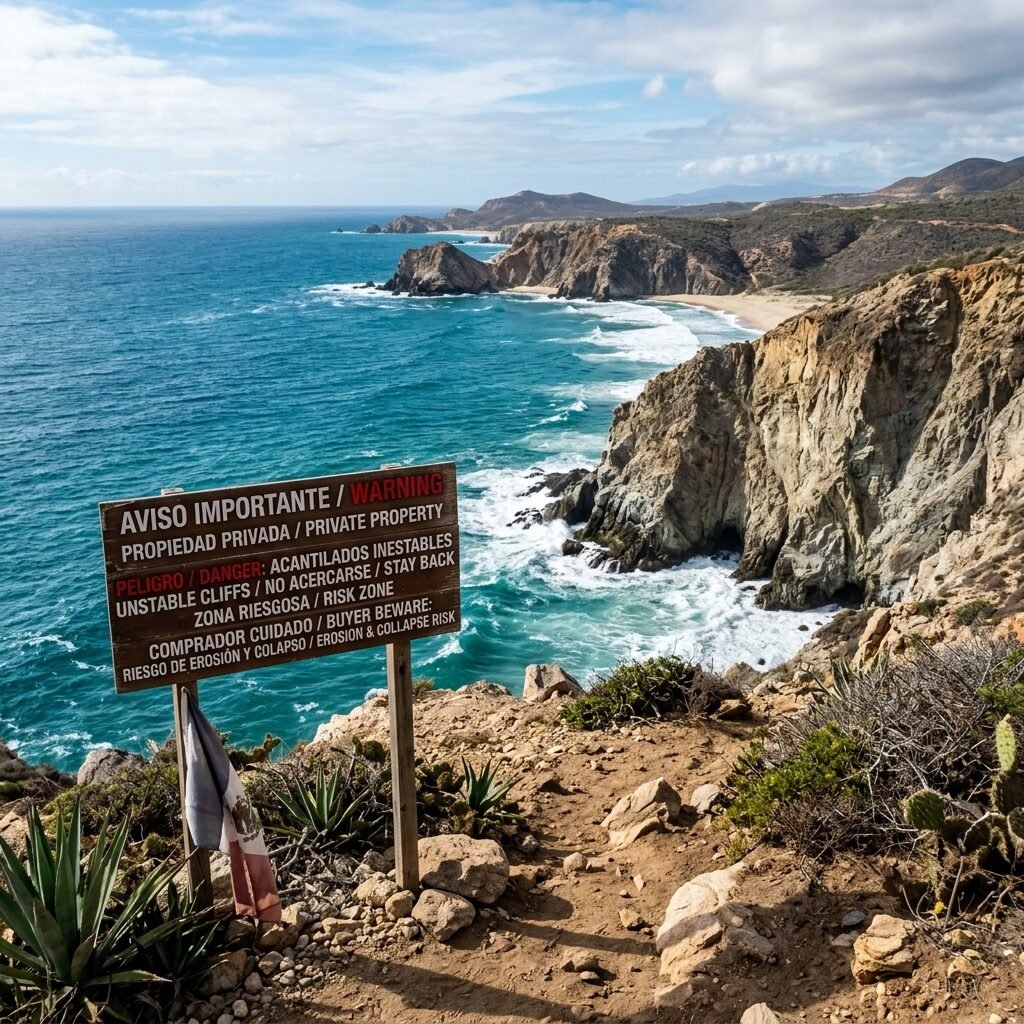
Of all the legal risks in Mexican real estate for foreign buyers, ejido land is the most serious — and the most common. It is responsible for more lost investments, legal disputes, and failed transactions than any other single issue. And yet it is almost entirely avoidable with one simple step: knowing what it is and asking the right question before you sign anything.
This guide is part of our Complete Foreign Buyer’s Guide to Mexico Real Estate 2026.
What Is Ejido Land?
Ejido land is communal agricultural land distributed to farming communities (ejidos) by the Mexican government following the 1910–1917 Mexican Revolution. The reform expropriated large private landholdings and redistributed them as collective community property under a special legal framework established in Article 27 of the Mexican Constitution.
Ejido members (ejidatarios) hold the right to use their individual plots, but the land itself belongs collectively to the ejido community. This means:
- Ejidatarios cannot sell ejido land to foreigners without first converting it to private title
- Ejido land does not appear in the Public Property Registry the same way private land does
- Any purchase of unconverted ejido land by a foreigner is legally void and unenforceable
Why Is Ejido Land a Problem in Coastal Mexico?
Here is the dangerous part: some of the most beautiful and strategically located coastal land in Mexico — exactly the land that foreign buyers most want — is ejido land.
Ejido communities historically settled near freshwater sources, agricultural land, and coastal areas long before tourism created property values. As Mexico’s coastal real estate markets exploded in value, enormous pressure built on ejido communities to sell their land. The result: an entire underground market of informal ejido “sales” — sometimes by ejidatarios acting in good faith, sometimes by outright fraudsters — to foreign buyers who did not understand what they were purchasing.
Markets where ejido land is most prevalent among the popular foreign buyer areas:
- Tulum and the Riviera Maya — historically high ejido concentration; major due diligence priority
- Puerto Vallarta outskirts and surrounding municipalities
- Baja California Peninsula — particularly rural and coastal areas outside developed zones
- Oaxacan coast — Puerto Escondido, Mazunte, Zipolite
The Ejido Conversion Process (Dominio Pleno)
Ejido land can be legally converted to private title through a process called dominio pleno — full private domain. This process is legitimate and has been the mechanism that allowed much of Mexico’s coastal development to proceed legally over the past 30 years.
The conversion process involves:
- A vote of approval by the ejido assembly (70%+ majority required)
- Registration of the conversion with the Registro Agrario Nacional (RAN)
- Individual parcels are issued private title (escritura) and entered into the Public Property Registry
- The former ejidatario can now legally sell to a foreigner via normal Fideicomiso or direct title
The key point: this conversion must be complete before the sale. A “letter of intent” from an ejido community, a notarized agreement with an ejidatario, or an unofficial agreement — none of these give you legal ownership. Only a fully registered, Public Registry-recorded private deed does.
How to Spot Ejido Land Before You Buy
Your attorney handles this through a proper title search, but here are the warning signs to watch for yourself:
- The seller cannot produce a full escritura pública (public deed) registered with the Public Property Registry
- The property appears in the Registro Agrario Nacional (RAN) rather than the Registro Público de la Propiedad
- The price seems suspiciously low compared to adjacent private-title properties
- The seller is described as an ejidatario or the ownership is described as “community” or “collective”
- The agent suggests using a “letter of possession” or “cesión de derechos” as the ownership document
- The property is in a rural or semi-rural area near the coast with no obvious development history
What Happens If You Accidentally Buy Ejido Land?
This is the worst-case scenario, and unfortunately it has happened to foreign buyers:
- Your ownership is legally void — you have no enforceable property right
- The ejido community or a future ejido authority can demand the land back
- You may have to pursue civil fraud claims against the seller, which are complex and expensive
- Mexican courts will generally side with the ejido community’s constitutional rights over an informal foreign buyer agreement
Recovery of investment is difficult and often impossible. This is precisely why a title search by a qualified attorney is not optional — it is the single most important thing you do in a Mexican property transaction.
The One Sentence That Protects You
Ask your attorney, before any offer is made: “Is this property fully registered as private title in the Registro Público de la Propiedad, free of any ejido status?”
If the answer is anything other than an unequivocal yes with documentation, walk away or wait for the conversion process to complete before proceeding.
All Listings on This Platform Are Verified
Every property listed on Lista de Bienes Raices Mexico is submitted by licensed agents. We require confirmation of titled (escriturada) status or completed dominio pleno before a listing is posted. Browse with confidence:
Browse Mexico Listings →💬 WhatsApp an Agent
Related: Complete Buyer’s Guide | Is It Safe to Buy in Mexico? | Fideicomiso Explained
Real Ejido Buyer Horror Stories (And What Could Have Prevented Them)
Understanding ejido risk in the abstract is one thing. Real case patterns give it teeth. The following describe common deal patterns seen across Mexico’s coastal markets — not specific individuals:
Case Pattern 1: The “Coastal Concession” Misrepresentation
A US buyer paid $180,000 USD for a beachfront lot near Tulum based on a “coastal concession” document the seller presented as equivalent to ownership. The lot was on ejido land that had received a temporary coastal use concession from the Mexican federal government — not private title. When the ejido community challenged the concession, the buyer had no enforceable ownership right. Five years of legal proceedings consumed $80,000 in attorney fees with uncertain outcome.
What would have prevented this: A title search at the Public Property Registry would have immediately revealed the absence of an escritura pública. An attorney review of the concession document would have identified it as a use right, not an ownership instrument.
Case Pattern 2: The Partial Conversion
A Canadian couple paid $220,000 for a lot sold by an ejidatario who had received a dominio pleno certificate but had not yet completed the Public Registry registration. The ejido subsequently voted to rescind the conversion before registration completed — leaving the buyers with paperwork that had no legal effect on ownership.
What would have prevented this: Requiring proof of completed Public Registry registration as a closing condition. The escritura must be filed and confirmed — not merely applied for.
Case Pattern 3: The Inherited Ejido Problem
A buyer purchased what appeared to be a fully titled property with a clean escritura. Three years later, a family member of the original ejidatario came forward claiming that the conversion to dominio pleno had occurred without proper ejido assembly authorization — making the conversion and all subsequent transfers potentially voidable. This required litigation to resolve.
What would have prevented this: Title insurance and a complete Registro Agrario Nacional search going back to the original ejido grant records. This level of research is available but requires a specialist in agrarian law.
Questions to Ask Your Agent About Any Property
Before you spend any time emotionally invested in a property, ask these questions directly:
- “Is this property fully registered in the Registro Público de la Propiedad with a current escritura pública?”
- “Has this property ever had ejido status? If so, when and how was the dominio pleno conversion completed?”
- “Are there any neighboring parcels with ejido or disputed status that could affect this property?”
- “Will you authorize my attorney to conduct a full Registro Agrario Nacional search on this parcel?”
A legitimate seller and agent will answer all four questions confidently and offer full cooperation with your due diligence. Hesitation on any of these questions is a serious warning sign.
Ready to Find Your Mexico Property?
Browse verified listings across all 6 major markets — direct agent WhatsApp access, no middlemen.